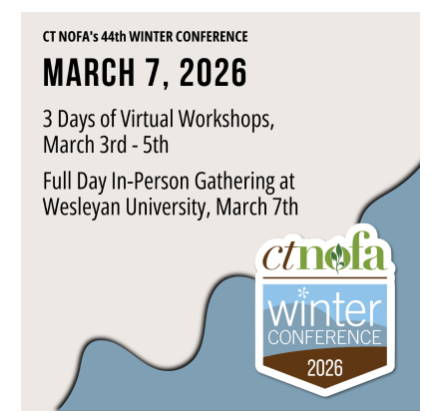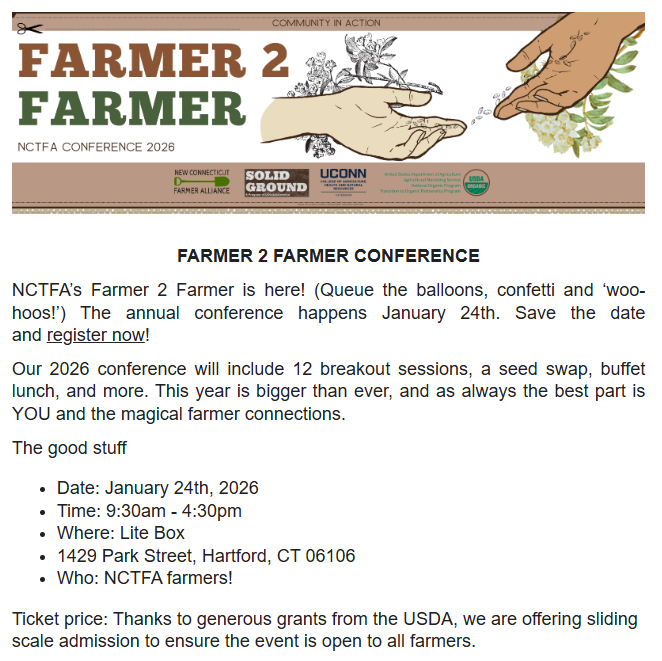
2026 CT NOFA’s Annual Winter Conference Middletown, CT March 7, plus virtual workshops March 3-5
|
|
|
2026 CT NOFA’s Annual Winter Conference Middletown, CT March 7, plus virtual workshops March 3-5
|
|
|
Berkshire Agricultural Ventures Zoom Virtual Workshop on selling at Farm Markets Jan. 28
|
|
|
|
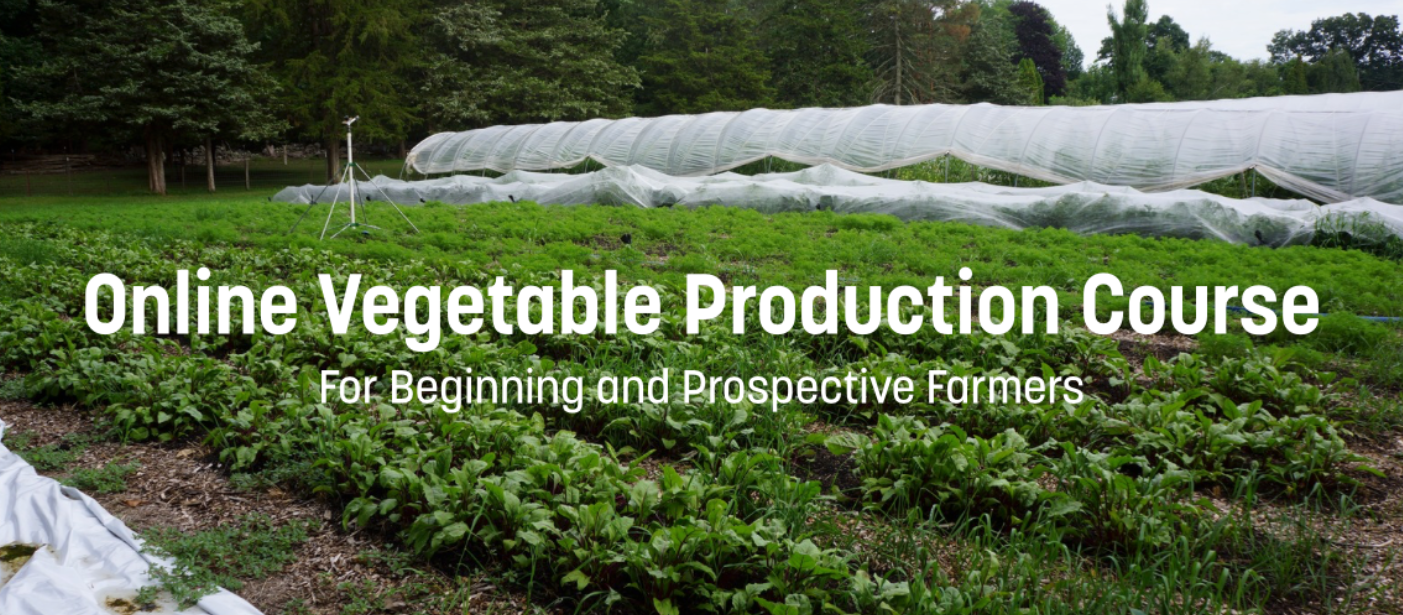
UConn Extension Online Vegetable Production Course- Register by Jan. 20
Participants will also have access to:
Details:
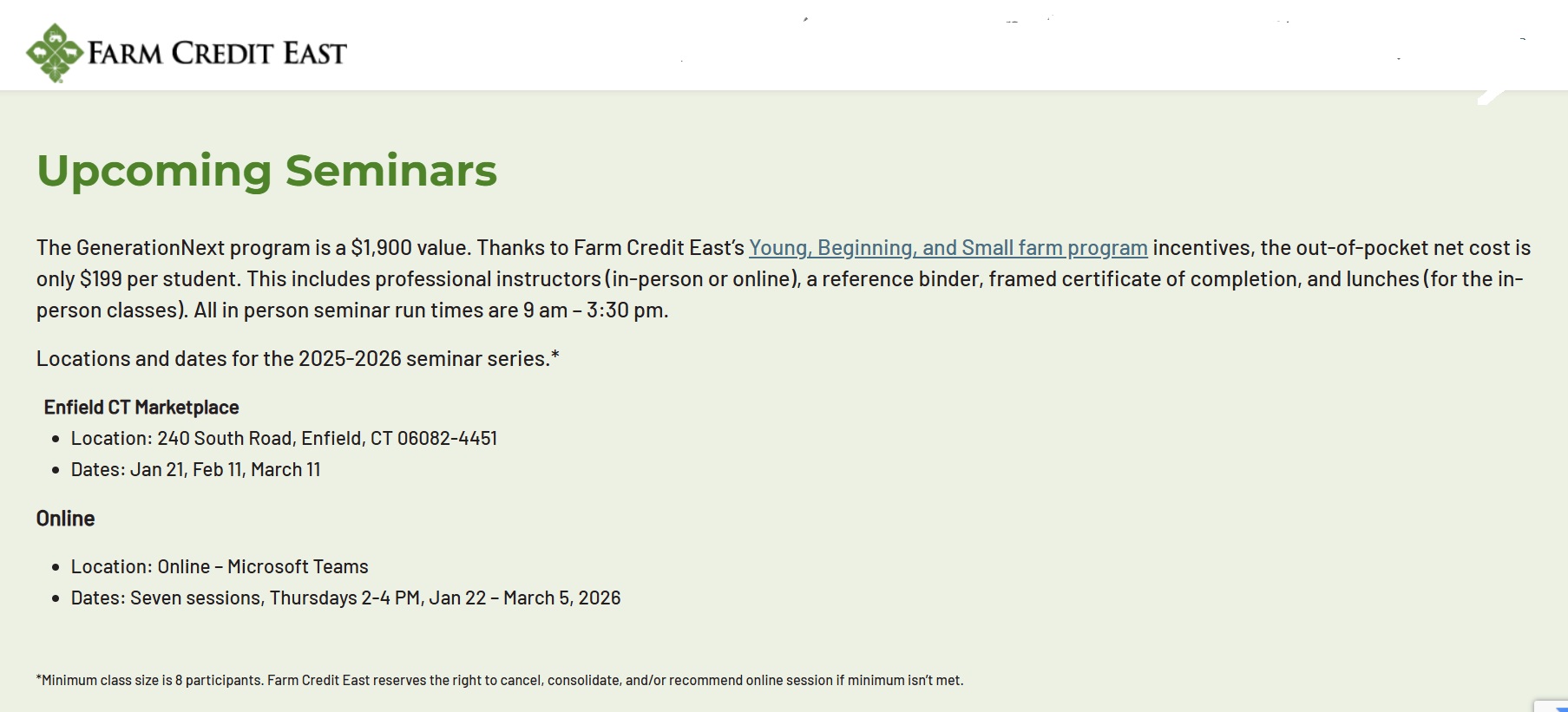
Farm Credit East GenerationNext Seminars Jan 21, Feb 11, March 11 Enfield, CT (Online options)
Click here for more information and to register.
NMFFPC Agritourism Workshop Jan. 29 6:30 PM at NMPL
New Milford Farmland and Forest Preservation Committee is hosting a seminar at the New Milford Public Library on Thursday, January 29 at 6:30 PM. Join us in learning more about the benefits and impact of Agritourism. Contact steven.kleppin3@gmail.com with any questions.
USDA Farm to School Grant Proposals due December 5, 2025
The program objective for the FY 2026 Farm to School Grant Program is to:
Improve access to local foods in eligible child nutrition program (CNP) sites through comprehensive farm to CNP programming that includes local sourcing and agricultural education efforts.
Proposed activities should clearly align with the objective and their associated activities and indicators. Careful consideration of proposed activities and indicators will prepare grantees for their progress reporting requirements if awarded.
Examples of project activities that could be supported by FY 2026 Farm to School grants and support the required objective include, but are not limited to:
Under this Request for Applications (RFA), all entities marked with an asterisk (*) must be part of a Partnership to be eligible to apply:
Applications are due December 5, 2025, at 11:59pm.
Click here for more information:
New England Regional Milkshed Project Virtual Monthly Workshops with Univ of Vermont
NEW ENGLAND MILKSHED WORKSHOPS EXPLORE PROTECTION STRATEGIES AGAINST FOREIGN ANIMAL DISEASE OUTBREAKS
Agricultural producers of livestock and livestock products and their industry allies are being asked to help shape strategies that can protect local farms and the New England “milkshed” from a foreign animal disease outbreak. Foreign animal diseases (FADs) are not normally found in the U.S., and some have the potential to cause devastating impacts to U.S. agriculture if they occur. A milkshed includes all sources of milk processed or manufactured into dairy products in a region.
Researchers at the University of Vermont (UVM) are hosting a series of four monthly, online workshops, where participants will identify challenges and possible solutions for New England’s dairy industry.
Workshops will be held via Zoom from 1:00 to 2:30 p.m. ET on the following dates:
Dr. Julie Smith, veterinarian and research professor in the UVM Department of Animal and Veterinary Sciences, is leading this milkshed project and collaborating with dairy farmers, dairy cooperatives, veterinarians, and federal and state regulatory officials. The goal is to gather input and ideas from the workshops that could lead toward reducing the risks of disease spread from livestock and dairy product movements.
“The workshops will explore strategies for reducing harm to the New England dairy industry if a foreign animal disease outbreak occurs anywhere in the United States. We need dairy producer and industry perspectives on what is needed to develop a milkshed protection plan.”
Why Care About Foreign Animal Diseases?
The U.S. enjoys preferential status in the international trade of animal products because of its freedom from many foreign animal diseases. Foreign animal disease-free status benefits animal welfare, the environment, and helps to make food more affordable. However, as long as these diseases exist in the world, it is important to have effective plans to deal with the threats and their consequences if an outbreak occurs.
| Register for Workshop |